Table of Contents

Signs Your Diesel Engine Needs an Overhaul

Diesel engines are designed to run reliably for thousands of operating hours, but continuous load, fuel quality variations, heat cycles, and mechanical stress gradually lead to wear and performance loss. Diesel engine overhauls ensure that critical components are restored to their original condition so the engine can continue operating safely, efficiently, and cost-effectively.

Whether you are planning a top overhauling of a diesel engine or considering a major overhauling of a diesel engine, it is important to recognize the early warning signs. Timely overhaul prevents sudden breakdowns, reduces fuel consumption, and avoids expensive damage to engine assemblies.

Understanding these symptoms early allows operators to schedule repairs in a planned manner rather than reacting to critical failures at sea or during production. Below are the key signs that indicate your diesel engine may be due for overhaul, along with likely causes, diagnostic checks, and the consequences of delaying the intervention.
Table of Contents

1. Excessive Exhaust Smoke

What It Means:
Continuous black, blue, or white smoke means combustion is not occurring efficiently. This leads to carbon buildup, loss of power, and increased operating cost.
Possible Causes:
Diagnosis:

2. Increasing Diesel Engine Oil Consumption

What It Means:
If the Diesel engine requires more frequent oil top-ups, internal sealing surfaces are wearing out. Reduced lubrication speeds up wear and heat generation.
Possible Causes:
Diagnosis:

3. Unusual Knocking or Metallic Noise

What It Means:
New or louder mechanical noise indicates improper clearance in moving parts. Continuing operation in this condition can cause severe component failure.
Possible Causes:
Diagnosis:

4. Excessive Fuel Consumption

What It Means:
Higher fuel usage without increased load or demand means the Diesel engine is no longer burning fuel efficiently.
Possible Causes:
Diagnosis:

5. Sludge or Contaminants in Diesel Engine Oil

What It Means:
Oil contamination reflects what is happening inside the Diesel engine. Sludge indicates improper combustion and cooling, while metal filings indicate wear.
Possible Causes:
Diagnosis:

6. Compression Loss

What It Means:
Low compression reduces starting performance and overall power output. The Diesel engine struggles to maintain efficiency at normal loading.
Possible Causes:
Diagnosis:

7. Turbocharger Issues

What It Means:
If the turbo is slow to spool, produces whistling sounds, or leaks oil, Diesel engine power and fuel efficiency drop sharply.
Possible Causes:
Diagnosis:

Top End vs. Major Overhaul : When to Choose Which

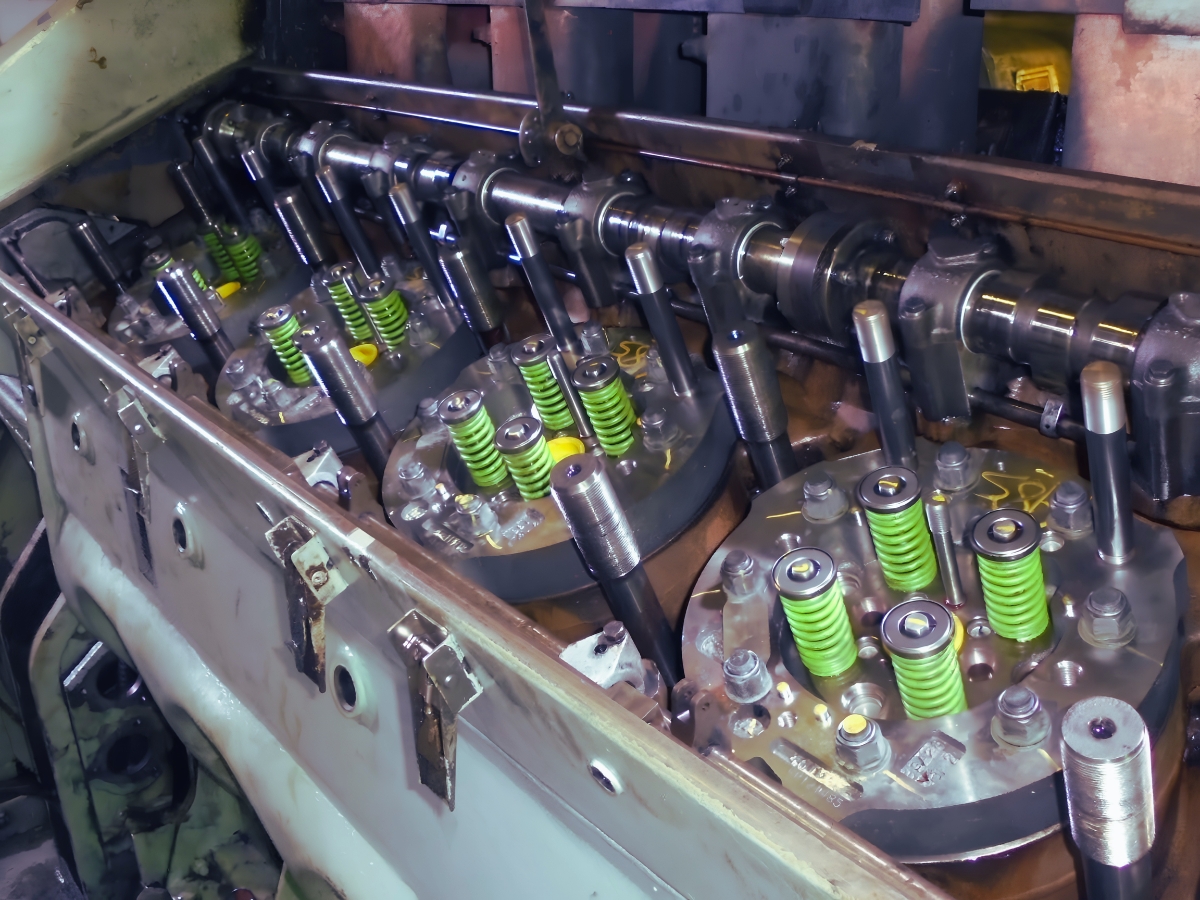
A top end overhaul diesel engine focuses on the combustion and breathing components such as valve seats, injectors, and cylinder heads. This type of top end overhaul diesel engine is usually required when symptoms are related to compression loss, smoke, or inefficient combustion.

On the other hand, a top overhauling of diesel engine may not always address deeper mechanical wear. When power loss, bearing noise, or liner wear is detected, a major overhauling of diesel engine becomes necessary to restore the engine’s original performance and life. A major overhauling of diesel engine includes piston replacement, liner honing, crankshaft bearing inspection, and complete re-calibration.

What Happens If You Delay the Overhaul?

Delaying a required diesel engine overhaul can lead to a gradual decline in performance, higher running costs, and eventually major mechanical failure. Here’s how postponing the overhaul impacts engine health and operational efficiency:
1. Increased Operating Costs (Fuel & Lube Oil Consumption Rises)
As internal components wear out, combustion becomes less efficient. The engine compensates by consuming more fuel and burning more lube oil. Over time, this leads to significantly higher daily operating costs, especially for engines running under continuous load.
2. Accelerated Wear of Critical Engine Parts
Components such as pistons, piston rings, cylinder liners, valves, and bearings are designed to operate within precise tolerances. When they wear beyond permissible limits, the wear rate accelerates. Delaying the overhaul means not only these parts deteriorate faster, but adjacent components may also get damaged.
3. Higher Risk of Sudden Breakdown and Unplanned Downtime
An engine running in degraded condition can fail unexpectedly. A sudden breakdown during vessel operations, power generation, or industrial production can lead to operational shutdown, scheduling disruption, safety hazards, and financial losses.
4. Significantly Higher Repair Costs Late
What may initially require a planned overhaul may turn into a major repair or replacement of high-value components if ignored. Damage to the crankshaft, connecting rods, turbocharger, or cylinder heads can multiply repair costs several times over compared to a timely overhaul.
Knowing the warning signs early helps you plan diesel engine overhauls more efficiently. Whether you’re preparing for a top overhauling of diesel engine or a full major overhauling of diesel engine, diagnostic tests and data-driven evaluation are key to minimizing cost and maximizing reliability.

Leave a Reply

0 Comments
Oldest
Newest Most Voted
Inline Feedbacks
View all comments
Related Posts
*The demo link will be shared only if a valid work or company email ID is provided.