Home » Blog » Engine Failures » Fuel Injector Malfunction Causes, Signs, Precaution and Solution
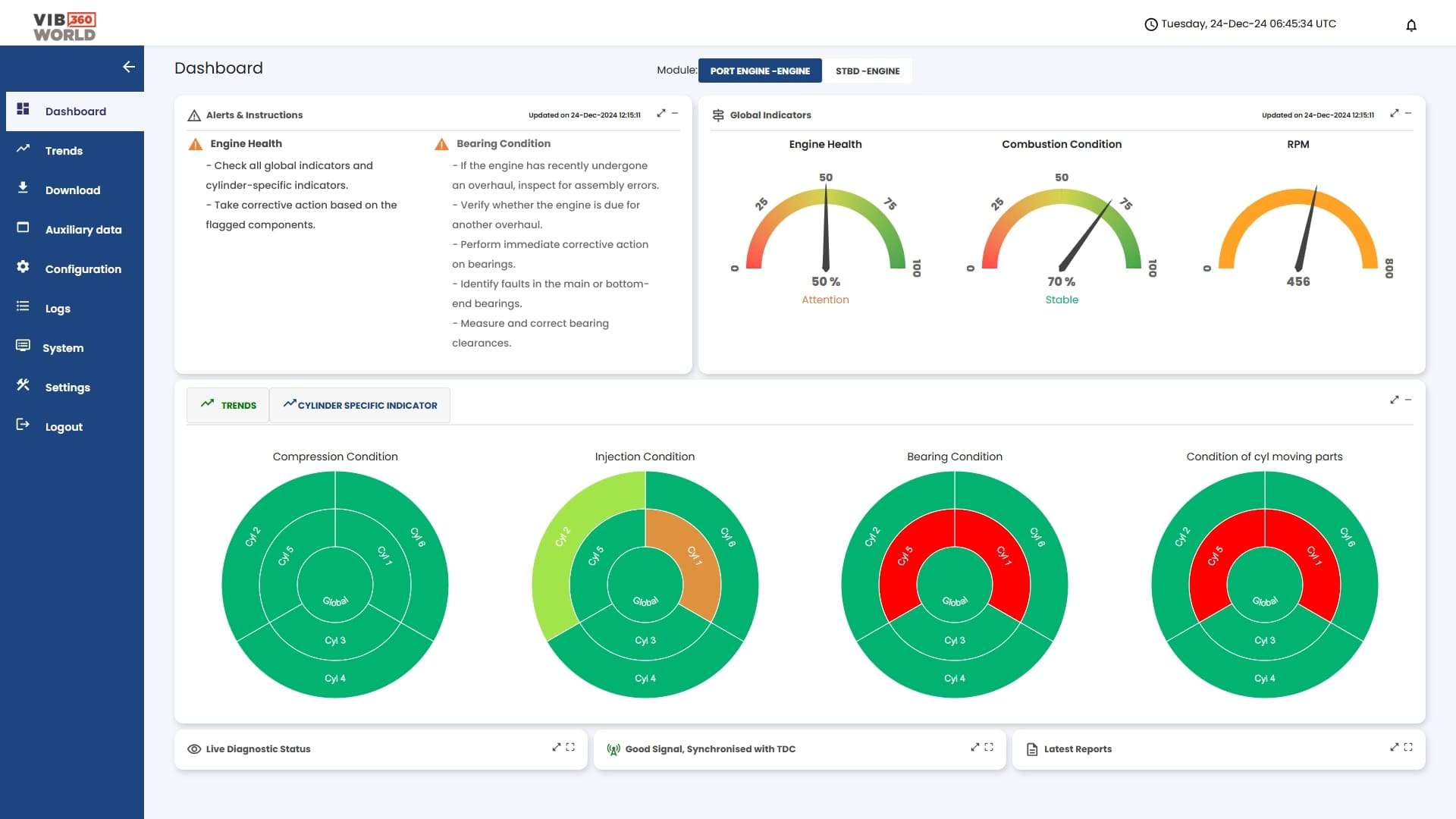
Table of Contents
Fuel Injector Malfunction Causes, Signs, Precaution and Solution
This blog explores the critical issue of injector malfunction in marine engines, highlighting its impact on vessel performance and safety. It discusses various causes of injector failure, potential consequences, necessary troubleshooting steps, and maintenance practices to prevent such malfunctions, ensuring the reliability of marine engines in challenging operating conditions.
Injector malfunction refers to a failure or poor performance of the fuel injector in an engine, leading to improper fuel delivery. This can result in issues such as inefficient combustion, excessive emissions, or even engine misfires. The injector plays a pivotal role in ensuring that fuel is injected into the combustion chamber in the correct amount and at the right time, and any malfunction can severely affect engine performance and longevity.
Components Involved & Their Role:
Fuel Injector: Atomizes fuel into fine droplets to ensure efficient combustion.
Fuel Pump: Delivers the necessary pressure to supply fuel to the injector.
Injector Nozzle: Controls the spray pattern of fuel into the combustion chamber.
Engine Control Unit (ECU): Monitors and adjusts the fuel injection timing and quantity based on engine parameters.
Criticality & Significance:
Injector malfunction is a critical issue because it directly affects engine efficiency, fuel consumption, and emissions. In industries like marine, oil & gas, and power generation, a malfunctioning injector can lead to significant power loss, increased wear on engine components, and costly downtime for repairs. This can also result in further damage to essential engine parts such as the crankshaft or fuel system if left unaddressed.
Conditions That Lead to Injector Malfunction:
Contaminated or Poor-Quality Fuel: Presence of impurities can clog the injector, causing uneven fuel delivery.
Improper Maintenance: Lack of regular servicing or cleaning of the fuel system can lead to injector wear or failure.
Excessive Engine Load: High operational hours or overload can stress injectors, leading to premature failure.
Crankshaft Deformation: In marine and power generation engines, high torque from prolonged operation under extreme loads or poorly maintained fuel systems can cause crankshaft deformation, further compounding injector malfunction.
Crankshaft or the fuel system. Recognizing the signs early and maintaining proper preventive measures is key to avoiding more severe engine failures.
What Would Cause the Injector Malfunction?
Clogged Injectors: Dirt or fuel debris can obstruct the injector nozzle, disrupting fuel delivery.
Bad Fuel Quality: Contaminated fuel can lead to injector wear or blockage over time.
Electrical Issues: Malfunctioning wiring or bad connections can prevent proper injector operation.
Wear and Tear: Continuous use can lead to mechanical failure or degradation of injector components.
Faulty Injector Driver: A malfunction in the injector control system can lead to incorrect fuel injection timing.
High Operating Temperatures: Excessive heat can result in injector failure and alterations in fuel delivery.
Symptoms/Signs of the Injector Malfunction
Engine Misfire: Inconsistent combustion results in irregular power delivery and engine roughness.
Increased Smoke Emissions: Excess soot or unburnt fuel is released, indicating incomplete combustion.
Poor Fuel Economy: An injector malfunction typically causes engines to consume more fuel than necessary.
Difficulty Starting: A malfunctioning injector may make it challenging to start the engine.
Loss of Power: A noticeable dip in power output can occur, especially under load.
Consequences of the Injector Malfunction
Engine Damage: Prolonged injector malfunction can lead to severe engine damage and costly repairs.
Engine Overheating: Inefficient fuel delivery can lead to overheating, affecting various engine components.
Fuel System Contamination: Debris from injectors can spread throughout the fuel system, causing widespread issues.
Poor Performance: The overall performance of the engine suffers, leading to unreliable operation.
Troubleshooting and Actions to Be Taken in Case of the Injector Malfunction
Check Fuel Quality: Analyze the fuel for contaminants or sediment that might affect injector function.
Inspect Injector Wiring: Look for damage or loose connections that may hinder electrical flow.
Examine the Injectors: Physically inspect injectors for signs of wear, clogging, or damage.
Run Engine Diagnostics: Use diagnostic tools to identify error codes related to fuel injection.
Clean Injectors: Depending on the condition, cleaning injectors may restore their functionality.
Solution for Injector Malfunction in Marine Engines
1.Conduct Thorough Diagnosis: Start with a detailed assessment and diagnostics to identify specific injector-related issues. The thorough diagnosis requires a high level of experience, which is why our team, with over three decades of experience solving engine issues across 30+ countries, is equipped to inspect, diagnose, and Repair Main Engines and their components at Neptunus.
2.Clean or Replace Injectors: For clogged injectors, use appropriate cleaning methods or consider replacement if they show significant wear or damage.
3.Verify Fuel Quality: Ensure that only high-quality fuel is used and check for contaminants or improper fuel grades that could harm injector function.
4.Implement Regular Maintenance Protocols: Establish a routine maintenance schedule that includes injector inspections, fuel system cleaning, and component checks to prevent future malfunctions.
Precautionary Measures for Addressing Injector Malfunction
Routine Maintenance: Regular inspections can catch issues early before they escalate.
Use High-Quality Fuel: Using clean, high-quality fuel can reduce the risk of injector clogging.
Monitor Engine Performance: Pay attention to any sudden changes in performance that might indicate injector problems.
Install Fuel Filters: Ensure adequate filtration in the fuel system to protect injectors from debris.
Keep System Clean: Regularly clean fuel lines and components to avoid build-up.
Remote Monitoring: Implement remote condition monitoring systems to track injector performance and detect early engine faults. With our Vib360 Engine Condition Monitoring System, you can reduce maintenance costs and prevent expensive breakdowns.
By understanding injector malfunctions and implementing best practices, marine engine operators can maintain performance, reduce downtime, and ultimately save on repair costs.
How Technology at Neptunus Can help you detect the Injector Malfunction Early
The VIB360 Engine Condition Monitoring System (ECMS) is a cutting-edge solution for early fault detection utilizing torsional vibration analysis. With its streamlined two-sensor configuration, it accurately detects cylinder-specific issues, facilitating proactive maintenance and maximizing engine performance.
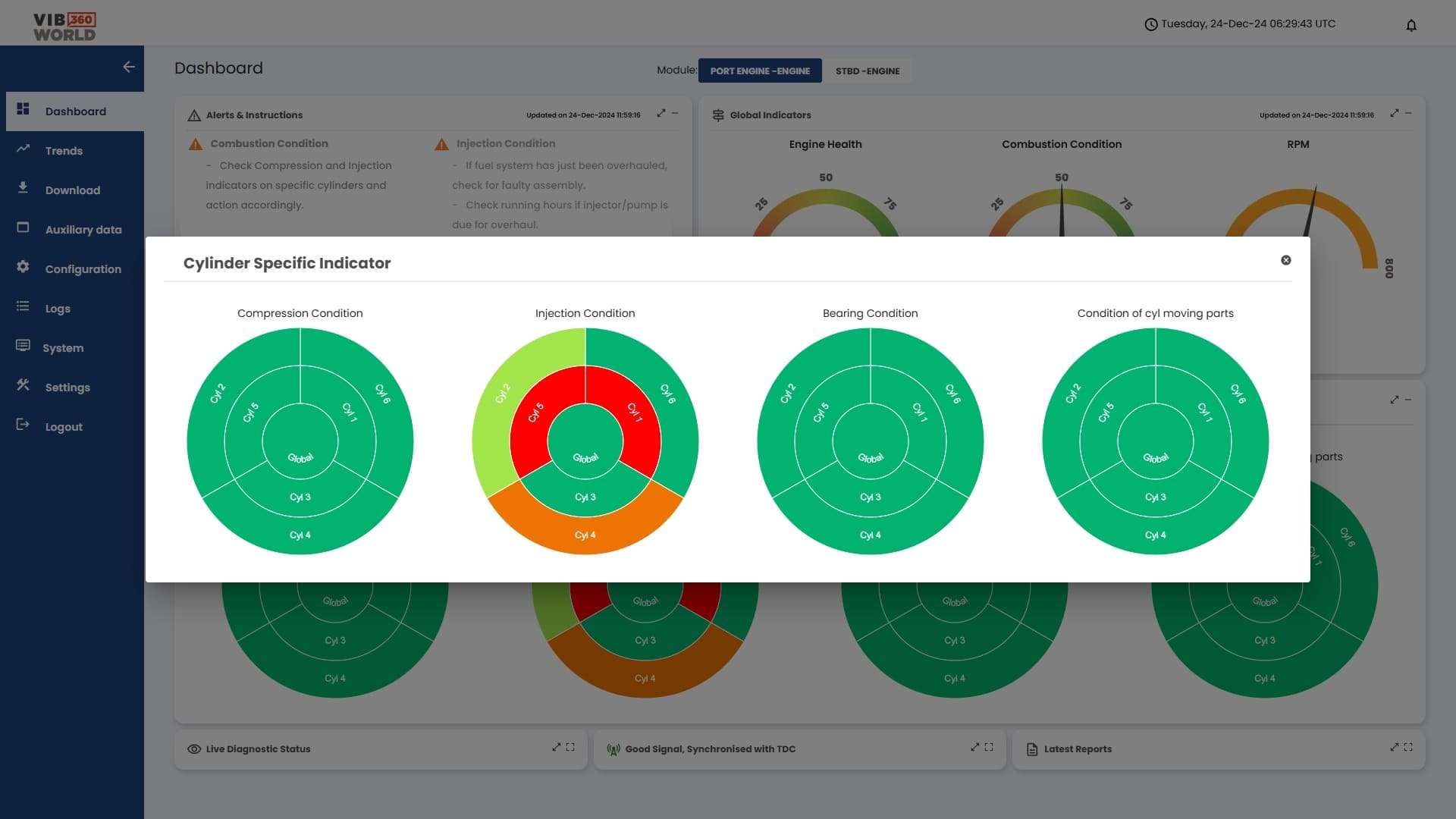
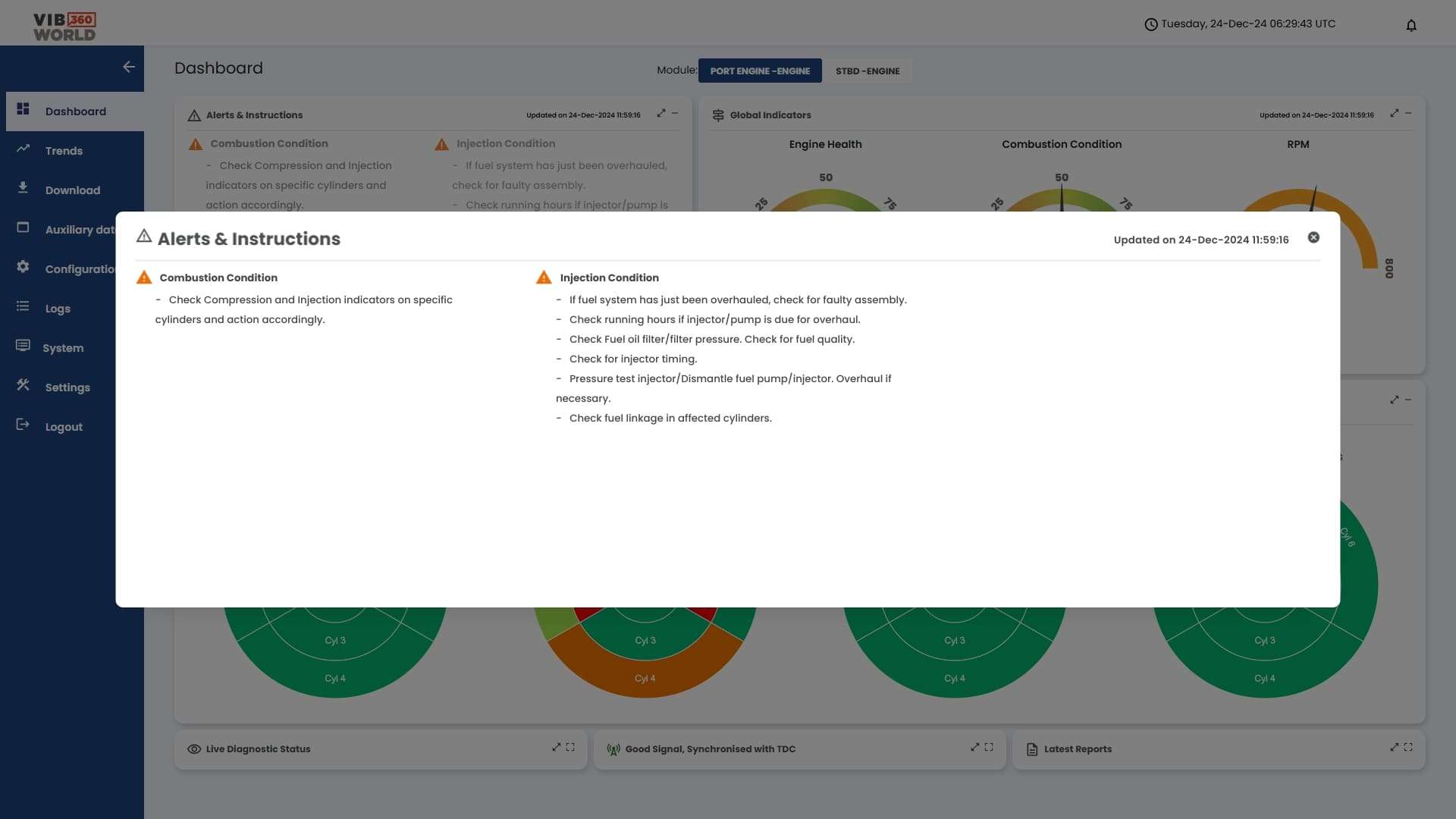
VIB360 Dashboard
Following are 3 steps you can use our VIB360 ECMS to detect the engine faults:
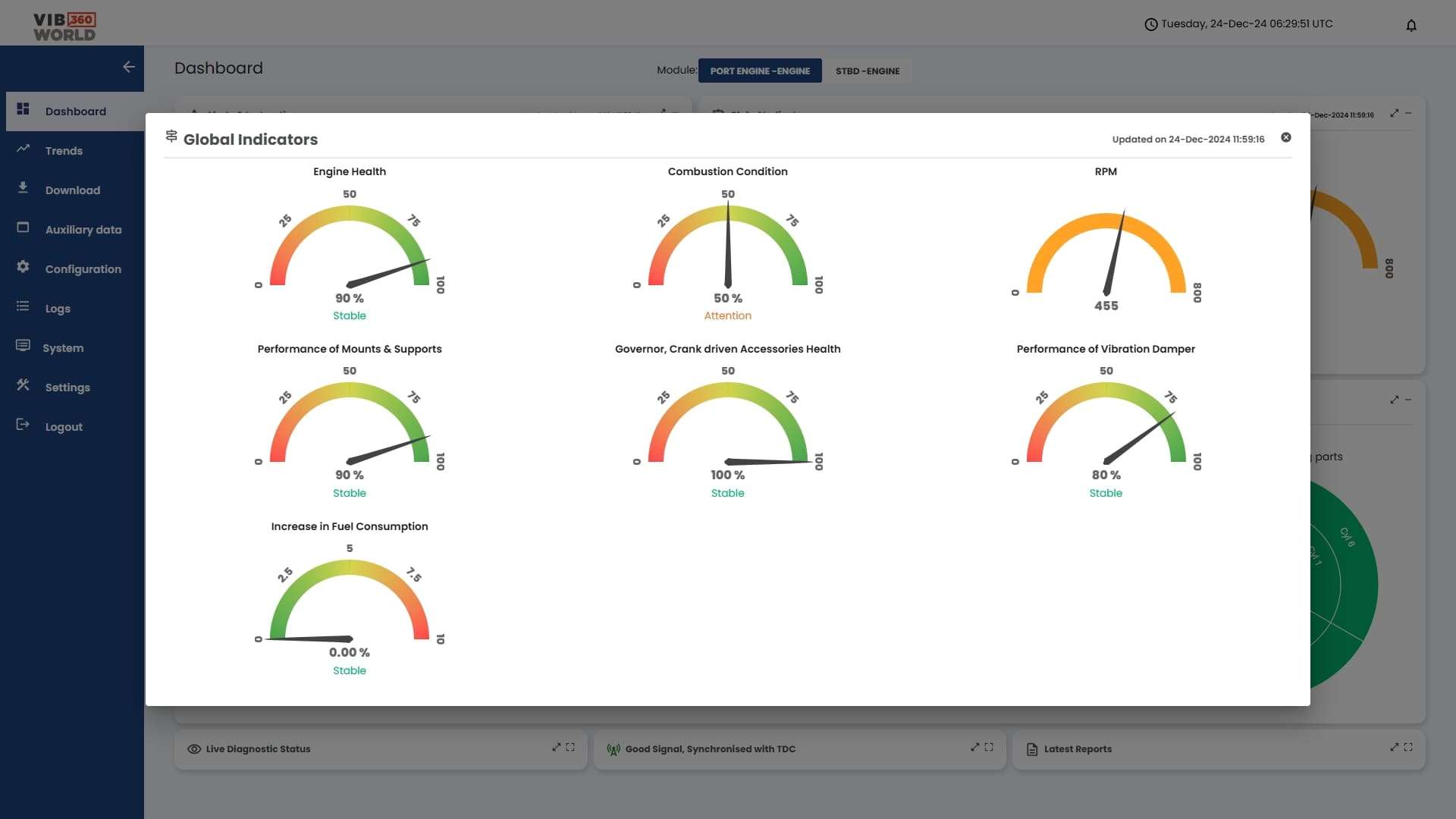
Step 1: Global Indicators
The Global Indicator provides a snapshot of the engine’s overall health:
Most indicators show minimal impact (displayed in green); however, the Combustion Condition is flagged as Orange indicating potential issues that may stem from the following areas:
Fuel Consumption: Fuel Injectors, Fuel Pump, Air Filter, Turbocharger, Oxygen Sensor, Mass Airflow Sensor (MAF Sensor), Piston Rings.